
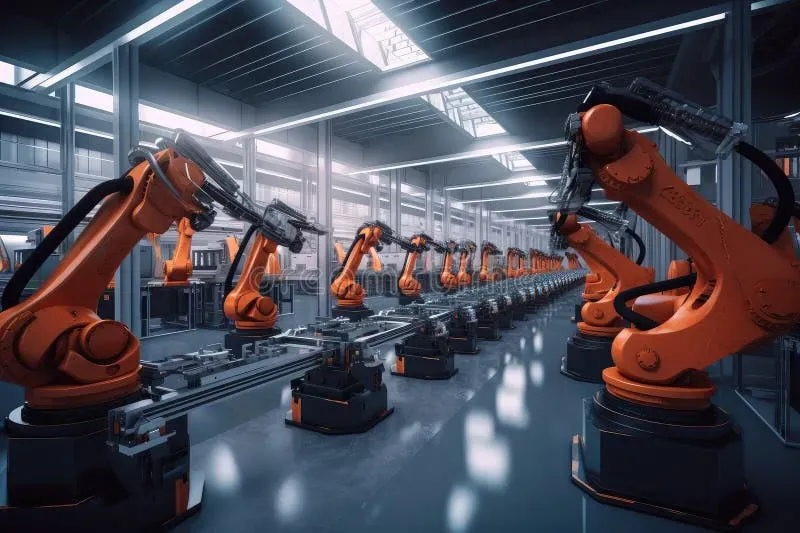
The Future of industrial automation is reshaping how factories, warehouses, and field sites operate, as smarter machines, networked devices, and data-driven insights expand the boundaries of what is possible in production, logistics, and service delivery across multiple industries around the world, from consumer electronics to energy, transportation, and healthcare. From collaborative robots in manufacturing to drones in industry, organizations are deploying sensors, AI, and integrated software ecosystems to boost throughput, reduce risks, optimize maintenance, and improve product consistency across the entire supply chain, even in complex, multi-site operation networks that span continents. Industry leaders are guided by emerging industrial automation trends that reveal a shift toward orchestration platforms that coordinate people, machines, and information, enabling end-to-end visibility, faster decision cycles, proactive adaptation to demand fluctuations and quality signals, and closer alignment between production planning and operational reality. Automation technology in manufacturing is becoming more modular and scalable, with cobots sharing work with humans, advanced vision systems reducing error rates, predictive analytics shaping preventive maintenance, and digital twins supporting simulation, digital threads, and continuous improvement across product lifecycles while lowering total cost of ownership. Together these forces are rewriting the ROI calculus for manufacturers, encouraging phased pilots, careful governance, and upskilling programs that prepare the workforce to collaborate with intelligent systems while sustaining safety, resilience, and long-term competitive advantage in a rapidly evolving global market.
Beyond the immediate instruments of automation, the broader narrative rests on automated systems, robotics-enabled production, and unmanned aerial platforms converging to create connected operating environments where data from sensors, machines, and human operators informs smarter decisions. This shift enables smart manufacturing ecosystems, digital twins, and edge‑computing architectures that empower real-time optimization, predictive maintenance, and resilient supply chains across industries. For leaders, the path is to adopt a phased, governance-driven approach that builds digital literacy, cybersecurity, and cross‑functional collaboration to maximize value while safeguarding safety and regulatory compliance.
Robots in Manufacturing: The Evolution from Repetition to Collaboration
Robots in manufacturing have moved beyond isolated cells to participate in end-to-end production, logistics, and value-chain activities. Modern robots are faster, more precise, and capable of soft-torque movements that reduce product damage during handling. They operate in shared spaces with humans thanks to advanced sensing, machine vision, safety features, and standardized interfaces that lower the risk of accidents. As a result, robots in manufacturing now perform high-volume tasks such as welding, painting, machine tending, and material handling with a level of consistency that manual labor struggles to match.
Cobots are at the heart of this shift, designed to work alongside people rather than replace them. They take on heavy lifts, dangerous operations, and repetitive sequences while humans focus on quality control, problem solving, and process optimization. The integration of cobots with sensors and AI creates a more flexible, ergonomic, and scalable production floor—an essential step in the broader automation technology in manufacturing landscape.
Drones in Industry: From Aerial Imaging to Core Operations
Drones in industry are expanding from cinematic footage to core operational tools. In manufacturing and logistics, drones perform rapid inventory checks, monitor sprawling facilities, and inspect hard-to-reach equipment such as pipelines, roofs, and tall silos. In distribution centers, unmanned aerial systems streamline stock-taking and item placement tasks, freeing up human workers to handle exceptions and value-added activities.
Beyond on-site use, drones are increasingly integrated with enterprise systems through IoT and cloud platforms. Data from aerial surveys can be fused with sensor streams to create a holistic view of asset health, process performance, and environmental conditions. This data fusion supports better forecasting, risk management, and faster response times, while extending the reach of automation technology in manufacturing into energy, infrastructure, and agriculture.
Industrial Automation Trends Shaping Modern Operations
Industry-wide automation trends converge to create smarter, more resilient operations. The shift toward smart factories means plants use interconnected devices, data analytics, and AI to optimize every step of production. In this vision, robots in manufacturing and drones in industry are not isolated assets but nodes in an intelligent network that can reconfigure in real time to meet changing demand, quality signals, and maintenance needs.
Edge computing brings AI and machine learning closer to the source of data, reducing latency and enabling faster, more reliable decisions on the plant floor. Combined with modular robotic systems, standardized interfaces, and robust cybersecurity, organizations can achieve greater flexibility, predictability, and safety as part of a holistic automation strategy. The ongoing evolution of automation technology in manufacturing is driving new business models and more sustainable operations.
Future of industrial automation: A Roadmap to Safe, Scalable, and Smart Operations
This vision centers on safe human-robot collaboration, cyber-physical security, and intelligent decision-making. Digital twins, predictive maintenance, and AI-driven optimization will mature, making automation technology in manufacturing more accessible to a broader set of organizations. The Future of industrial automation becomes less about a single breakthrough and more about integrated systems that learn from data, adapt to conditions, and collaborate with workers.
Organizations pursue phased pilots and governance frameworks, with clear goals, risk assessments, and upskilling programs. Interoperability, data governance, and continuous improvement will be essential as factories scale automation across lines and sites. By embracing this trajectory, enterprises can realize safer workplaces, faster throughput, and new value propositions built on data-driven insights.
Implementation Playbook: Practical Steps for Adoption
Strategy and governance lay the foundation. Establish clear goals for what robots in manufacturing and drones in industry should achieve, and set up a data, safety, and change-management framework. Begin with small, well-scoped pilots to validate concepts, quantify benefits, and learn how to integrate with existing ERP, MES, and inventory systems.
Then scale with interoperability, workforce transformation, safety, and data analytics. Emphasize open interfaces, common data models, and compatible software platforms to accelerate deployment across facilities. Invest in upskilling the workforce—robotics programming, drone operation, analytics, and cybersecurity—to maximize return on investment while maintaining robust safety and compliance.
People, Process, and Governance in a Hybrid Workforce
Success with robots in manufacturing and drones in industry hinges on people alongside machines. While automation reduces repetitive tasks and hazards, humans drive strategy, problem-solving, and continuous improvement. A focus on workforce development, safety culture, and cross-functional collaboration ensures that automation investments translate into measurable outcomes, not just technology deployments.
Governance must cover data privacy, cybersecurity, and change management. Implement ongoing upskilling, cross-training, and knowledge-sharing programs to foster a culture of experimentation. With strong governance and a view toward human-plus-machine collaboration, organizations can unlock new business models and resilience while protecting workers and maintaining trust in the system.
Frequently Asked Questions
What is the Future of industrial automation, and why is it important for modern manufacturing?
The Future of industrial automation describes the ongoing integration of robotics, sensors, AI, and connected systems to make factories more adaptive, data-driven, and safer. It is already reshaping production by enabling faster decision-making, higher quality, and safer operations across manufacturing and logistics.
How do robots in manufacturing drive the Future of industrial automation, and what benefits do they deliver?
Robots in manufacturing—especially collaborative robots (cobots)—increase throughput, precision, and repeatability while sharing work with humans. Enabled by advanced vision, sensing, and AI, they reduce downtime and improve safety, contributing to higher overall equipment effectiveness (OEE).
In what ways are drones in industry advancing the Future of industrial automation, and where do they add value?
Drones in industry are moving from imagery to core operations such as inventory checks, equipment inspections, and asset monitoring. Integrated with IoT and cloud data, they boost accuracy, safety, and speed while feeding data to maintenance and supply-chain systems.
What are the leading industrial automation trends shaping smart factories today?
Key trends include the shift to smart factories enabled by interconnected devices and AI, edge computing for low-latency analytics, modular automation and cobots, and heightened cybersecurity. Together, these trends create resilient, data-driven production networks.
How does automation technology in manufacturing influence safety, productivity, and workforce skills within the Future of industrial automation?
Automation technology in manufacturing improves safety and productivity by offloading dangerous or repetitive tasks to machines while upskilling workers to design, program, and manage automated systems. Enterprises benefit from better data, safer operations, and new high-value roles.
What steps should an organization take to start implementing the Future of industrial automation, including smart factories and drones in industry?
Begin with clear goals and governance, run incremental pilots, and adopt open standards for interoperability. Leverage digital twins and real-world pilots to validate concepts before scaling, while training staff and securing data to realize the benefits of robots in manufacturing and drones in industry.
| Aspect | Summary | Key Takeaways |
|---|---|---|
| The Evolving Role of Robots in Manufacturing |
Robots have evolved from isolated cells to integrated ecosystems that span the value chain. Cobots enable safe human–robot collaboration; advanced sensing, vision, and AI power real-time, safe, productive operation. Robots perform high-volume tasks with consistency, while data streams support predictive maintenance and improved OEE. |
|
| Drones in Industry: From Aerial Imaging to Core Operations |
Drones move from cinematic footage to essential roles in inventory checks, inspection, and logistics. They integrate with IoT and cloud platforms; data from aerial surveys fused with equipment sensors enables asset health forecasting and faster decisions. Drones extend reach in energy, infrastructure, and agriculture while improving safety. |
|
| Industrial Automation Trends Shaping the Landscape |
Key trends include smart factories, edge computing, collaborative automation and modularity, cybersecurity, and a focus on upskilling the workforce. These elements turn robots and drones into nodes in an intelligent network that responds to demand and maintenance needs in near real-time. |
|
| Implementing the Future of Industrial Automation: Practical Considerations |
Realizing benefits requires strategy and governance, incremental pilots, interoperability, workforce transformation, safety and compliance, data governance, maintenance planning, and change management. |
|
| Real-World Use Cases and Industry Impact |
Automotive cobots accelerate production; drones in logistics streamline stock-taking and routing; drones in energy/infrastructure enable safer inspections and faster maintenance; automation improves quality and traceability across electronics and pharmaceuticals. |
|
| Challenges and How to Mitigate Them |
Common hurdles include integration complexity, security risks, capital costs, and workforce concerns. Mitigation involves retraining, cybersecurity investments, governance, and phased deployment with stakeholder engagement. |
|
| The Human-Plus-Machine Paradigm |
Humans and machines collaborate to achieve outcomes neither can reach alone. Robots handle hazardous or monotonous tasks; humans drive innovation, while drones extend reach and enable faster data collection. This synergy enables new business models like outcome-based maintenance. |
|
| The Road Ahead: What to Expect in the Next 5–10 Years |
Expect deeper integration, more autonomous decision-making, and broader applicability across products and geographies. Look for smart factories with end-to-end digital twins, capable cobots, expanded drone workflows, advanced analytics, and stronger cybersecurity and governance. |
|
Summary
Future of industrial automation reshaping how work gets done across factories, warehouses, and field sites by uniting robots, drones, and intelligent software to boost safety, productivity, and resilience. The convergence enables safer, more efficient operations, data-driven decision-making, and new business models. To realize this future, organizations should pursue phased deployments, strong governance, upskilling, and robust cybersecurity, while evaluating use cases and managing risks. By prioritizing collaboration between humans and machines, the Future of industrial automation becomes a practical pathway to competitive advantage across industries.