
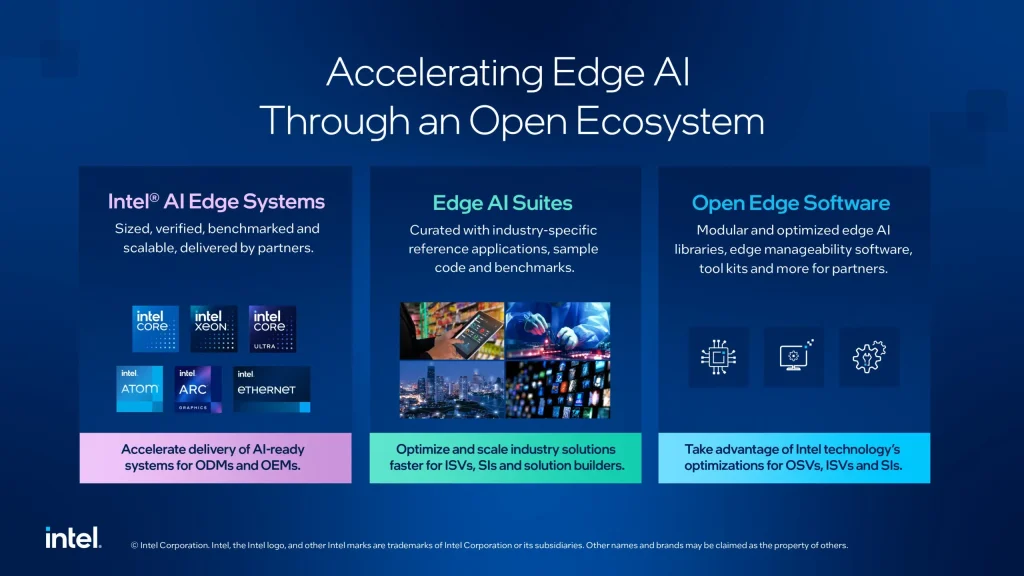
Edge AI is redefining how data is processed at the source, delivering faster insights right on devices and in environments that demand instant decisions. By moving computation closer to the data, this approach reduces latency, lowers bandwidth usage, and improves privacy for critical applications where cloud access can be limited. This enables real-time AI processing even in environments with intermittent connectivity. With the right hardware and software stacks, edge computing is accelerating practical deployments across sectors that rely on fast, local inference. Ultimately, the shift toward distributed intelligence and related capabilities is redefining how organizations generate value from data while preserving privacy and resilience.
Beyond the everyday jargon, the idea of processing intelligence at or near the edge refers to distributed AI that runs close to data creation points. In practice, this means near-edge processing, localized inference, and autonomous decision loops that do not rely on constant cloud connectivity. Developers optimize compact models, apply quantization, and tailor runtimes to fit small devices while preserving essential accuracy. A balanced strategy blends local analytics with selective connectivity to the data center, delivering privacy, resilience, and scalable performance.
Edge AI at the Edge: Real-Time Processing for Immediate Decisions
Edge AI at the Edge enables real-time decision-making by performing inference and data analysis directly on devices and at the network edge. This approach reduces latency, preserves privacy, and lowers cloud bandwidth requirements, aligning with the article’s emphasis on practical, on-site intelligence.
As hardware accelerators and edge-optimized runtimes become more capable, edge AI applications can execute complex models with low power draw on cameras, gateways, and industrial sensors. This supports real-time AI processing that keeps critical decisions local, bringing AI at the edge from concept to reliable, scalable reality.
On-Device AI: Powering Low-Latency Inference in Harsh Environments
On-device AI brings inference and analysis directly to the device, enabling low-latency responses even in environments with intermittent connectivity. By keeping data local and using model optimization techniques, organizations can maintain responsiveness where cloud access is limited.
This approach is essential for settings like manufacturing floors, clinics, and remote monitoring deployments, where fast, privacy-conscious decisions are paramount. On-device AI supports edge computing in industry by delivering robust performance with energy-efficient accelerators and compact models.
Edge Computing in Industry: Accelerating Manufacturing and Logistics with Local Intelligence
Edge computing in industry empowers factories and logistics networks to process streams of sensor and video data on-site. Local intelligence drives faster anomaly detection, predictive maintenance, and route decisions, reducing downtime and improving throughput without relying on centralized data centers.
By deploying edge AI applications across equipment, conveyors, and fleet sensors, organizations can achieve real-time visibility and autonomous operations. The result is a more resilient, efficient industrial ecosystem where data-driven actions happen at the source.
AI at the Edge: Privacy-Preserving Analytics at the Source
AI at the Edge emphasizes privacy and data governance by keeping sensitive information on the device. Local processing reduces data transmission, lowering exposure risk and helping organizations meet regulatory requirements while still extracting valuable insights.
Security-by-design practices, secure enclaves, encrypted model weights, and robust OTA updates ensure edge deployments remain trustworthy. These measures, combined with local analytics, support compliant, resilient, real-time intelligence at the edge.
Edge AI Applications Across Sectors: From Manufacturing to Healthcare
Edge AI applications span industries—from manufacturing to healthcare—delivering tangible outcomes like reduced downtime, higher product quality, and safer patient monitoring. On-device AI enables vision systems and sensor fusion to operate without constant cloud connectivity.
Across sectors, real-world edge deployments leverage AI at the edge to deliver timely insights, preserve privacy, and enable autonomous operations. The breadth of edge AI applications demonstrates how localized intelligence can transform diverse workflows on the factory floor, in clinics, and beyond.
Designing Secure, Scalable Edge AI Deployments
Successful edge AI programs require careful planning around latency, security, and maintenance. Emphasizing security-by-design, robust OTA updates, and centralized monitoring helps manage model drift, device provisioning, and data governance as edge networks scale.
Best practices include starting with clear use cases, piloting with representative data, and designing end-to-end data flows that balance on-device processing with selective cloud summaries. By focusing on secure, incremental deployment and reliable updates, organizations can sustain high performance across edge AI applications.
Frequently Asked Questions
What is Edge AI and why is real-time AI processing important at the edge?
Edge AI enables AI processing on local devices or at the network edge, bringing inference on-device and decision-making close to data sources. Real-time AI processing at the edge reduces latency, preserves privacy by avoiding data transfers to the cloud, and lowers bandwidth requirements, enabling immediate actions in latency-sensitive environments. This makes edge deployments vital for manufacturing floors, clinics, and other settings where instant insights matter.
How does on-device AI differ from cloud AI, and what are its benefits for edge computing in industry?
On-device AI runs inference directly on local hardware rather than in centralized cloud servers. Benefits include lower latency, improved privacy, reduced network traffic, and greater reliability when connectivity is limited—key advantages for edge computing in industry such as manufacturing and logistics.
What are edge AI applications across industries, such as manufacturing and healthcare?
Edge AI applications span manufacturing, healthcare, transportation, smart cities, and more. In manufacturing, on-device AI detects defects and monitors equipment in real time; in healthcare, it enables privacy-preserving patient monitoring and rapid alerts; other domains use edge AI applications to enhance safety and efficiency with local decision-making.
What technologies power AI at the edge, including accelerators and on-device runtimes?
AI at the edge relies on hardware accelerators (NPUs, embedded GPUs, DSPs), model optimization (quantization, pruning, distillation), and on-device runtimes (TensorFlow Lite, ONNX Runtime). Secure and resilient deployment practices—such as secure enclaves and OTA updates—help maintain performance and trust in edge AI systems.
How does edge computing in industry address latency and privacy concerns in real-time decision-making?
Edge computing in industry moves processing to the data source, minimizing cloud round-trips and reducing latency. It also keeps sensitive data local, lowering privacy risk and easing compliance. Together, these benefits enable reliable, real-time decisions on the factory floor, in clinics, or in smart infrastructure.
What best practices ensure secure and reliable Edge AI deployments in on-device environments?
Adopt clear use cases with measurable outcomes, pilot with representative data, and design for incremental deployment. Optimize data flow to keep as much processing on-device as possible, and implement security-by-design—encryption, secure boot, attestation—and robust remote management with OTA updates to ensure reliability.
| Key Point | Summary |
|---|---|
| What is Edge AI | AI processing occurs on local devices or at the network edge near data sources, reducing latency, preserving privacy, lowering bandwidth usage, and improving reliability. |
| Why now | Driven by smaller, energy-efficient accelerators; model optimization techniques (quantization, pruning); proliferation of sensors/IoT; growing demand for real-time insights. |
| Industries and applications | Manufacturing (anomaly detection, preventive maintenance); Healthcare (privacy-preserving monitoring); Transportation/autonomous systems; Smart cities/energy; Retail experiences; Agriculture/environmental monitoring. |
| Technology behind Edge AI | Hardware accelerators (NPUs, embedded GPUs, DSPs); Model optimization (quantization, pruning, distillation); On-device runtimes (TensorFlow Lite, ONNX Runtime); Secure deployment (enclaves, OTA updates, data governance). |
| Deployment challenges | Latency and reliability concerns; security and data governance; model drift and maintenance; power/thermal constraints; remote management and updates. |
| Best practices | Start with clear use cases and measurable outcomes; pilot with representative data; design for incremental deployment; optimize end-to-end data flow; invest in security-by-design. |
| Future outlook | Increased on-device autonomy, faster decision loops, interoperable edge platforms, and broader deployment that complements cloud AI as hardware/software matures. |