
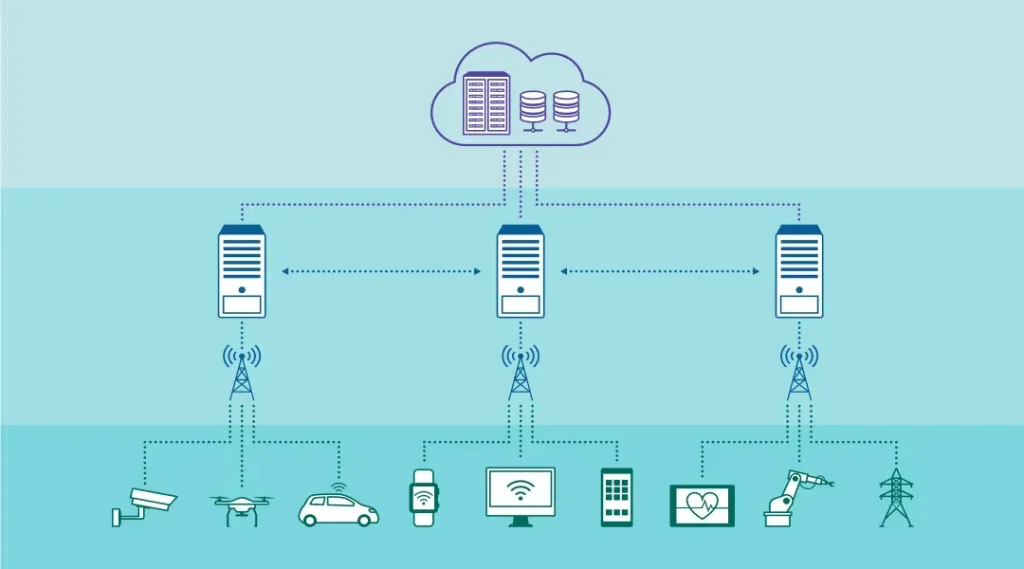
Edge computing and 5G are redefining how data is processed at the source, unlocking faster decisions and more responsive applications across industries and organizations of all sizes, from manufacturing floors to urban networks. As devices, from factory sensors to wearable health monitors, generate torrents of data, processing at the edge reduces latency, conserves bandwidth, and supports real-time analytics for critical operations, safety systems, and customer experiences in dynamic environments. From smart factories to connected cities, edge computing trends point toward distributed intelligence and closer alignment between compute resources and business goals, driving faster product cycles, resilient operations, and data sovereignty across regional boundaries. Optimized edge deployments also leverage higher reliability networks and lightweight orchestration to manage workloads close to where data is created, with automated policy enforcement, continuous monitoring, and rapid recovery strategies. By marrying edge processing with 5G’s capabilities, organizations can unlock new use cases and accelerate digital transformation across industries, such as immersive customer experiences, predictive maintenance, and compliant data-sharing ecosystems.
A complementary way to frame this shift is near-edge computing, where processing moves closer to devices and sensors rather than relying on distant clouds. In practical terms, distributed compute fabrics, often deployed as micro data centers or MEC nodes, enable fast analytics, local data governance, and resilient services even when network conditions vary. This approach harmonizes cloud resources and the radio access network, opening avenues for autonomous systems, real-time monitoring, and intelligent services at the edge. As networks evolve toward more capable, policy-driven orchestration, developers can design apps that scale at the periphery while preserving security and privacy.
Edge computing and 5G: Real-time convergence enabling ultra-low latency and local analytics
The pairing of edge computing with 5G creates a foundation for processing data close to its source. This proximity dramatically reduces round-trip time, enabling real-time or near-real-time analytics and decision-making at the edge. By leveraging edge-native design, micro data centers, and MEC (multi-access edge computing) capabilities, organizations can deploy compute, storage, and AI inference closer to factories, hospitals, and smart devices, turning latency into a competitive asset.
This convergence also benefits scalability, security, and cost efficiency. With 5G’s low-latency, high-throughput connectivity, edge workloads can be allocated dedicated resources through network slicing to meet the needs of time-sensitive applications. Real-world use cases—such as predictive maintenance on manufacturing floors and rapid triage in healthcare—illustrate how edge computing use cases paired with 5G enable faster insights while keeping sensitive data closer to the source.
Edge computing trends shaping modern networks
Across industries, edge computing trends are driving distributed intelligence and closer alignment between network architecture and business goals. Edge-native application design emphasizes building software from the ground up to run efficiently on edge devices and edge servers, rather than merely porting cloud workloads to the edge. This shift demands optimized data pipelines, resource management, and security strategies tuned for the edge environment.
A growing trend is the deployment of micro data centers near data sources and the maturation of orchestration tools to manage distributed workloads. Kubernetes-based edge orchestration, lightweight runtimes, and improved security controls enable consistent deployment and governance across a global edge fabric. These developments support edge computing trends by enabling reliable operations at scale while maintaining compliance and data locality.
5G technology advancements driving edge workloads
The latest 5G technology advancements go beyond faster downloads; they enable network slicing, ultra-reliable low-latency connections, and the capacity to connect billions of devices. For edge workloads, this means predictable performance and the ability to allocate dedicated network resources for critical applications. Higher throughput and smarter routing ensure time-sensitive data reaches where it needs to be without unnecessary delay.
As network capabilities advance, edge workloads in manufacturing, smart cities, and retail become more feasible at scale. Real-time quality control, predictive maintenance, and immersive customer experiences leverage edge analytics connected through a resilient, 5G-enabled fabric. These 5G-enabled edge use cases exemplify how the technology advancements unlock new operational efficiencies and business models.
IoT edge computing: Connecting billions of sensors at the edge
The Internet of Things (IoT) is a principal driver for edge computing, bringing processing power closer to thousands of sensors and devices. IoT edge computing reduces latency and conserves bandwidth by performing data analysis locally, enabling richer and faster insights from environments like smart buildings and industrial automation.
IoT edge devices often run lightweight inference models, filtering data at the source and transmitting only meaningful summaries or anomalies. As IoT ecosystems expand, the edge becomes the backbone that keeps devices responsive and secure, with governance and data privacy managed at the edge and in transit.
AI at the edge: Real-time inference close to data sources
Artificial intelligence at the edge extends machine learning inference to edge devices or nearby edge servers, enabling real-time decisions for tasks such as image recognition in quality control or predictive maintenance alerts. Edge AI reduces dependence on constant cloud connectivity and supports privacy-preserving analytics by processing sensitive data locally.
Deploying AI at the edge requires careful consideration of resource constraints, model optimization, and secure model updates. The combination of edge-native ML models and robust edge security practices helps organizations unlock continuous intelligence near data sources while meeting regulatory and data-residency requirements.
Beyond 5G: The road to distributed, intelligent networks
While 5G powers today’s edge workloads, momentum is building toward beyond-5G architectures that increase edge node density and deepen AI-enabled orchestration. A more distributed, intelligent fabric is envisioned where compute, storage, and network capacity are dynamically allocated to meet evolving workloads with strict latency targets.
Practically, this means broader adoption of MEC, finer-grained network slicing, and deeper integration of AI into network control planes. As networks evolve, developers can create services that scale at the edge, respond rapidly to security threats, and deliver adaptive experiences for users and machines alike, all while aligning with edge computing trends and future network roadmaps.
Frequently Asked Questions
How are edge computing trends shaping 5G deployments for real-time workloads?
Edge computing trends emphasize distributed intelligence, micro data centers, edge-native applications, and streamlined orchestration. When combined with 5G’s ultra-low latency and network slicing, this enables real-time analytics and responsive edge workloads close to data sources. This setup reduces round-trip time, lowers bandwidth needs, and accelerates insights for industries like manufacturing, logistics, and healthcare.
What 5G technology advancements enable edge analytics and intelligence?
5G technology advancements such as network slicing, lower latency, higher throughput, and massive device connectivity unlock predictable, edge-level performance for analytics. With edge computing, these capabilities let you allocate dedicated resources to critical workloads and perform local inference and processing at the edge. The result is scalable, timely insights without overloading central clouds.
What are some concrete edge computing use cases enabled by 5G across industries?
Examples of edge computing use cases powered by 5G include real-time quality control and predictive maintenance in manufacturing, traffic management and environmental sensing in smart cities, and real-time inventory and personalized experiences in retail. Healthcare triage and remote monitoring can also run edge analytics to speed decisions while preserving privacy. These edge computing use cases illustrate the value of a 5G-enabled edge fabric across industries.
How does IoT edge computing work with 5G to improve data processing near sources?
IoT edge computing brings processing near sensors and devices, filtering data at the source and transmitting only meaningful summaries. Paired with 5G connectivity, it supports high device density and fast feedback cycles, enabling near-instant decisions with reduced bandwidth and lower cloud dependency. This approach improves latency, lowers costs, and enhances data privacy by keeping sensitive data closer to its origin.
What is AI at the edge and why is it important in 5G-enabled networks?
AI at the edge runs inference on edge devices or nearby edge servers, delivering real-time intelligence close to data sources. In 5G networks, more devices can run AI workloads locally, enabling use cases like smart video analytics, predictive maintenance, and autonomous automation. Edge AI also supports privacy-preserving analytics since raw data can stay on the device or within the edge.
What security and governance considerations should guide edge computing with 5G deployments?
Security and governance must evolve as edge computing and 5G deployments expand. Implement hardware-backed trust, secure boot, code signing, and zero-trust architectures; enforce data locality, retention, and compliance policies; and design for resilience with redundancy and automated remediation. Use unified edge orchestration to apply consistent security and governance across distributed edge nodes.
| Topic | Key Points |
|---|---|
| What is Edge Computing? | Processing data near its source at the network edge to reduce latency, save bandwidth, enable real-time decisions; when paired with 5G, gains fast, reliable connectivity for edge workloads. |
| 5G–Edge Synergy | Low latency, high throughput, massive device connectivity; supports predictable performance and dedicated resources via network slicing for edge workloads. |
| Local Analytics & Use Cases | Analytics performed at the edge enable immediate actions; examples include manufacturing anomaly detection, proactive maintenance, and real-time patient data processing with privacy benefits. |
| Edge Computing Trends | Edge-native app design, proliferation of micro data centers near data sources, and mature orchestration/management tools for distributed edge environments. |
| 5G Advancements for Edge | Network slicing, improved routing, security enhancements, and higher uplink/downlink efficiency to support edge workloads with predictable performance. |
| IoT Edge Computing | IoT devices process near sensors, reducing latency and bandwidth; near-real-time analysis and scalable deployments by filtering data at source. |
| AI at the Edge | Real-time AI inference near data sources enables immediate decisions while preserving privacy and reducing cloud dependence. |
| Beyond 5G Roadmap | MEC expansion, tighter integration of compute and network resources, more granular slicing, and distributed intelligent infrastructure for dynamic workloads. |
| Security, Privacy & Governance | Strengthened security models, zero-trust, hardware-backed security, data locality and compliance considerations, plus resilience and automated remediation. |
Summary
Edge computing and 5G together form a powerful platform for real-time insights, scalable IoT deployments, and AI-powered intelligence at the edge. By embracing edge computing trends and leveraging 5G technology advancements, organizations can deliver faster, more secure, and more adaptable services. The real-world impact spans manufacturing, healthcare, logistics, and smart cities, with security, governance, and resilient architectures underpinning trusted edge operations. Looking ahead beyond 5G, the evolution toward a distributed, intelligent fabric will accelerate edge workloads, AI at the edge, and multi-access edge computing (MEC) across industries.