
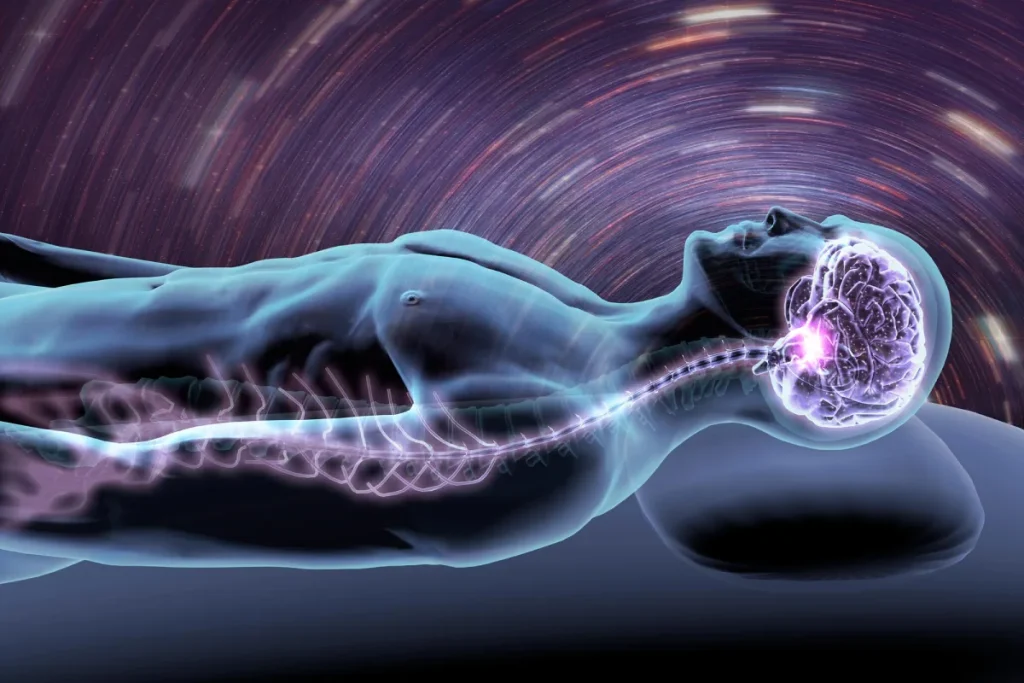
The Traditional Understanding of Restorative Rest
For decades, the global scientific community has operated under the fundamental assumption that the human brain requires extended periods of complete unconsciousness to successfully repair itself. Traditional biological textbooks emphasize that restorative neural maintenance only occurs when the entire central nervous system officially powers down for the night. However, an unprecedented new finding reveals that localized brain recovery may completely challenge this deeply entrenched physiological dogma.
Historically, researchers believed that without crossing the definitive threshold into deep, continuous slumber, cognitive degradation was absolutely inevitable. Sleep deprivation was viewed as a uniform, whole-brain crisis that could only be resolved by securing eight hours of horizontal, uninterrupted rest. This rigid scientific framework is now facing intense scrutiny as modern neuroscientists uncover highly sophisticated mechanisms capable of executing vital cleanup operations without **requiring total systemic shutdowns**.
A Groundbreaking Discovery by the National Institutes of Health
In a major leap forward for mammalian neurology, researchers funded by the National Institutes of Health have successfully demonstrated that specific restorative functions can be manually activated while a subject remains entirely awake. The international research team discovered an innovative method to artificially trigger vital sleep-related processes within targeted, highly specific regions of an active brain. This monumental scientific breakthrough proves that achieving localized brain recovery is physically possible without putting the entire organism to sleep.
By conducting extensive experiments on sleep-deprived mice, the scientists effectively challenged the long-held belief that the entire brain must simultaneously enter a resting state to perform necessary neural maintenance. Instead, the collected data strongly suggests that biological architecture is surprisingly modular, allowing distinct neurological sectors to undergo intense restorative cycles while other regions remain fully vigilant. This profound discovery fundamentally rewrites our understanding of **how mammalian brains process fatigue**.
Mimicking Deep Sleep Rhythms in Awake Subjects
To achieve this impossible biological feat, the engineering team utilized advanced light-activated implants combined with highly precise genetic modifications. This cutting-edge optogenetic technology allowed researchers to artificially induce rhythmic cycles of activity and inactivity directly within one isolated side of the subject\’s brain. By systematically forcing these specific, alternating electrical patterns, the team successfully simulated the exact physiological signatures of deep rest to trigger localized brain recovery.
The artificial stimulation sessions lasted precisely thirty minutes and were meticulously designed to replicate the slow-wave activity traditionally observed only during deep sleep cycles. Following the active stimulation period, the targeted brain regions exhibited significantly lower levels of natural slow-wave activity during subsequent actual sleep, clearly indicating that their immediate need for recovery had been satisfied. This artificial manipulation successfully tricks targeted neurons into believing they have already completed a **full restorative sleep cycle**.
Reversing Cognitive Deficits Without Actual Slumber
While altering internal electrical signals represents an incredible engineering achievement, the most crucial aspect of the study was verifying tangible behavioral improvements in the test subjects. To confirm the practical efficacy of the stimulation, scientists subjected the sleep-deprived mice to a complex tactile memory test that heavily relies on adequate rest. The results provided undeniable, empirical evidence that the artificially induced localized brain recovery successfully reversed the severe cognitive effects of chronic sleep loss.
Mice that received the targeted optogenetic stimulation in their motor and sensory regions performed remarkably well, matching the cognitive baseline established by completely well-rested control groups. Conversely, sleep-deprived mice that did not receive the advanced light therapy performed catastrophically worse on the exact same tactile memory assessments. This striking performance gap conclusively proves that forcing targeted neural recalibration actively protects the brain from the **damaging symptoms of extreme exhaustion**.
Understanding Non-Rapid Eye Movement Mechanisms
The foundational science driving this incredible breakthrough centers entirely around the mechanics of Non-Rapid Eye Movement, commonly referred to as NREM sleep. In healthy adult mammals, NREM stages account for roughly eighty percent of total sleep time and play a massive role in maintaining vital neural connections. Understanding how this specific biological phase strengthens memory pathways is absolutely critical for developing future therapies centered around localized brain recovery.
During a natural NREM cycle, the brain undergoes a massive structural reorganization, aggressively preserving essential neural connections while simultaneously trimming away useless data to create room for new learning. The recent study successfully proves that the benefits of NREM sleep are not dependent on an overall reduction in total brain activity, but rather rely on specific alternating firing patterns. Isolating and replicating this exact firing sequence allows scientists to manually trigger memory consolidation on demand, bypassing **the need for prolonged unconsciousness**.
Future Implications for Treating Neurological Decline
Beyond simply providing a fascinating glimpse into the internal mechanics of rodent neurology, this landmark study carries massive, highly lucrative implications for future human medical interventions. Identifying the exact pathways required to artificially stimulate neural restoration brings pharmaceutical companies and neurologists one massive step closer to successfully treating severe cognitive decline. Perfecting the science of localized brain recovery could eventually revolutionize how modern medicine addresses aggressive neurodegenerative diseases.
If these precise stimulation techniques can eventually be safely adapted for human patients, clinicians could theoretically combat the severe memory loss associated with aging, Alzheimer’s disease, and chronic insomnia. Furthermore, high-stress professionals such as combat pilots, emergency surgeons, and first responders could utilize non-invasive stimulation tools to maintain peak cognitive awareness during extended, multi-day operations. This brilliant convergence of neurobiology and advanced technology promises to permanently elevate the absolute limits of **human cognitive endurance**.
Conclusion
In conclusion, the groundbreaking NIH-funded study successfully shatters the long-standing belief that comprehensive neural restoration strictly requires total, whole-brain unconsciousness. By utilizing advanced optogenetic technology to trigger localized brain recovery in awake mice, researchers successfully reversed the cognitive damage caused by severe sleep deprivation. As this incredible science continues to evolve, the ability to manually activate deep sleep benefits promises to revolutionize human cognitive medicine.
Frequently Asked Questions (FAQ)
Question 1: What is the main finding of this groundbreaking new sleep study?
The study suggests that localized brain recovery might not require full, entire-system sleep; researchers successfully triggered restorative neural processes in specific regions of completely awake mice.
Question 2: How did scientists artificially trigger brain recovery in awake subjects?
Researchers utilized advanced light-activated implants and genetic modifications to force rhythmic, alternating electrical cycles that mimic the restorative patterns of natural deep sleep.
Question 3: Did the targeted brain stimulation actually improve the behavior of the mice?
Yes, sleep-deprived mice that received the targeted stimulation performed just as well on complex tactile memory tests as mice that were completely well-rested.
Question 4: What specific phase of normal sleep were the researchers trying to replicate?
The scientists specifically replicated the slow-wave alternating firing patterns heavily associated with Non-Rapid Eye Movement (NREM) sleep, which is crucial for memory consolidation.
Question 5: How could this localized brain recovery discovery eventually benefit humans?
If successfully adapted for human use, this technology could help prevent cognitive decline, treat chronic insomnia, and allow high-stress professionals to maintain peak mental focus during extended sleepless periods.